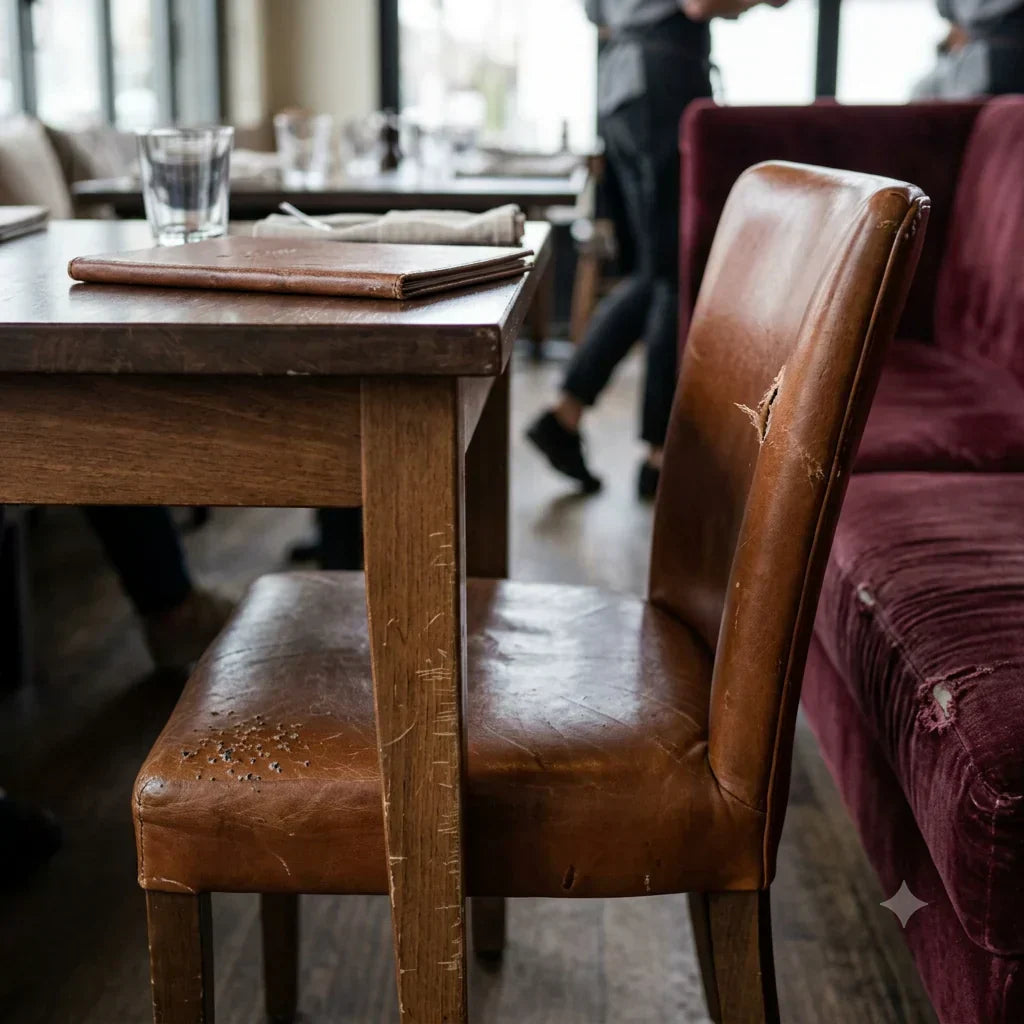
The True Cost of Buying Cheap Restaurant Furniture
When planning a restaurant fit-out or refurbishment, keeping costs under control is understandably a priority. Furniture can represent a significant investment, and when comparing suppliers, it can be tempting to focus on securing the lowest possible price.
On the surface, cheaper furniture can appear to offer excellent value.
However, hospitality furniture isn't judged by how it performs on delivery day. It's judged by how it performs after thousands of customers have sat on it, moved it, cleaned around it and used it day after day.
The reality is that the cheapest furniture is not always the most cost-effective furniture.
For restaurant owners, pub operators, hotel managers and hospitality groups, the more important question is:
What will this furniture cost over the next five years - not just today?
What Are the Hidden Costs of Cheap Hospitality Furniture?
The upfront purchase price of hospitality furniture is only part of the overall cost.
Lower-cost furniture can often lead to:
- Earlier replacement cycles
- Increased maintenance and repair costs
- Operational disruption
- Reduced customer comfort
- Damage to brand perception
- More frequent procurement activity
- Higher overall lifetime expenditure

The best-value furniture is rarely the cheapest or the most expensive. It's the option that delivers the strongest balance between durability, appearance, functionality and long-term performance.
What Years in Hospitality Furniture Have Taught Us
According to Zain Ansar, Managing Director of Tables and Tops, one of the most common mistakes hospitality operators make is evaluating furniture solely on upfront price.
With more than a decade of experience supplying contract furniture to restaurants, pubs, cafés, hotels and hospitality groups, Zain has seen first-hand how furniture decisions can affect operational costs long after a fit-out has been completed.
"Many operators focus on what they're saving today without considering what they may spend over the next five to ten years replacing, repairing and managing furniture that wasn't designed for their environment. The most successful projects typically focus on long-term value rather than short-term savings."
With that in mind, here are some of the hidden costs that hospitality businesses should consider before choosing the lowest-priced option.
The Seven Hidden Costs of Cheap Restaurant Furniture
1. Earlier Replacement Cycles
One of the biggest hidden costs associated with lower-quality furniture is premature replacement.
Hospitality venues place enormous demands on furniture. Chairs are constantly moved, tables are cleaned multiple times per day and seating areas often operate from morning until late evening.
Furniture that appears cost-effective initially may begin showing signs of wear much sooner than expected. Loose joints, damaged finishes and structural weaknesses can emerge after only a few years of heavy use.
A chair that costs half as much but needs replacing twice as often may not represent a saving at all.
When viewed over a five or ten-year period, replacement frequency can significantly affect the total cost of ownership.
2. Increased Maintenance & Repair Costs
Furniture doesn't need to fail completely to become expensive.
Wobbly table bases, damaged table tops, loose chair frames and worn upholstery all require attention.
While individual repairs may seem relatively minor, the cumulative cost of maintenance can quickly add up.
Beyond repair bills, there is also the hidden cost of staff time. Reporting issues, arranging repairs, sourcing replacement components and managing ongoing maintenance all consume valuable resources.
For busy hospitality operators, these hidden operational costs are often overlooked during the purchasing process.
3. Lost Revenue from Out-of-Service Furniture
Every table and chair within a venue has earning potential.
When furniture becomes unusable, that earning potential can disappear.
A damaged chair removed from service or a table that can no longer be used during peak trading periods can affect seating capacity and customer flow.
For high-volume venues, even small reductions in available covers can have a noticeable impact over time.
The hidden cost isn't simply replacing the furniture - it's the revenue that may be lost while that furniture is unavailable.
4. Reduced Customer Comfort
Furniture plays a significant role in the overall customer experience.
Guests may not always comment on comfortable seating, but they often notice when seating feels unstable, cramped or uncomfortable.
Customer comfort can influence:
- Length of stay
- Repeat visits
- Customer satisfaction
- Online reviews
- Overall perception of the venue
In competitive hospitality markets, small details often contribute to larger business outcomes.
Investing in furniture that supports comfort can help create a more positive experience and encourage customers to return.
5. Damage to Brand Perception
Furniture is one of the most visible assets within a hospitality venue.

Worn finishes, chipped table tops and visibly ageing furniture can affect how customers perceive the quality of the business.
For venues that invest heavily in branding, interior design and customer experience, poorly performing furniture can undermine that investment.
Customers often make subconscious judgements about cleanliness, professionalism and quality based on the environment around them.
Furniture that maintains its appearance over time helps reinforce the image a venue wants to project.
6. Inconsistent Appearance Across the Venue
Another common consequence of lower-quality furniture is piecemeal replacement.
When individual items fail at different rates, operators often replace them one at a time rather than replacing the entire scheme.
Over time, this can lead to mismatched finishes, inconsistent styles and an overall lack of visual cohesion.
While this may not immediately affect operations, it can dilute the intended design concept and create a less polished customer experience.
For hospitality brands, consistency matters.
7. Increased Procurement Time
Every replacement project requires effort.
Whether it's sourcing new suppliers, requesting quotations, arranging deliveries or coordinating installations, furniture replacement consumes management time.
For independent operators, this often falls directly on owners or managers.
For larger hospitality groups, procurement activity can involve multiple stakeholders and lengthy approval processes.
Furniture that lasts longer reduces the frequency of these activities and allows teams to focus on running the business rather than replacing assets.
A Better Way to Evaluate Hospitality Furniture
Rather than focusing solely on purchase price, hospitality operators should consider the overall lifecycle value of furniture.
When comparing options, ask:
- How long is the furniture expected to last?
- Is it suitable for the intended level of use?
- How easy is it to maintain?
- Are replacement parts readily available?
- What warranty support is offered?
- Will it continue to represent the brand effectively over time?
Looking at furniture through the lens of total ownership cost often leads to very different purchasing decisions than focusing on upfront price alone.
When Cheaper Furniture Can Make Sense
Of course, lower-cost furniture is not always the wrong choice.
Certain situations may justify prioritising lower upfront expenditure, including:
- Pop-up venues
- Seasonal hospitality concepts
- Temporary installations
- Trial locations
- Short-term lease agreements
In these cases, the expected lifespan of the business model may not justify a longer-term furniture investment.
The key is ensuring the decision reflects the operational reality of the venue rather than simply choosing the cheapest available option.
Hospitality Furniture Decision Checklist
Before choosing furniture for your venue, ask:
- How long do we expect this furniture to remain in service?
- How heavily will it be used each day?
- What maintenance requirements should we expect?
- How easily can damaged items be repaired?
- Will the furniture still support our brand image in five years?
- What would disruption caused by replacement cost our business?
- Are we choosing the lowest price or the best long-term value?
The Difference Between Cost & Value

When comparing furniture quotes, it's natural to focus on the upfront cost. After all, that's the figure sitting in front of you when budgets are being reviewed and decisions need to be made.
The challenge is that cost is immediate, while value only reveals itself over time.
It becomes apparent after thousands of customers have used the furniture, after countless cleaning cycles, after the first repairs are needed and after the venue has been operating long enough for wear and tear to take hold.
That's when the impact of durability, maintenance requirements, customer comfort and long-term performance starts to outweigh the initial purchase price.
The operators who get the most from their furniture investment aren't necessarily the ones who spend the most. They're the ones who understand the difference between buying furniture cheaply and buying furniture well.
And more often than not, that's a distinction that only becomes obvious after opening day.
About the Author
Zain Ansar is Managing Director of Tables and Tops and has over a decade of experience supplying contract furniture to restaurants, cafés, pubs, hotels and hospitality groups across the UK. Having advised on furniture selection for new openings, refurbishments and multi-site rollouts, Zain specialises in helping hospitality operators balance durability, aesthetics and long-term commercial value.